

Micah Bell (RDR2) – Character Texturing Study

This project is a personal character texturing and presentation study based on an existing production-quality game-ready character model. My focus was not on recreating the sculpt, but on exploring how high-resolution skin texturing, physically based materials, lighting and presentation can influence the perception of a character.
Using Adobe Substance 3D Painter, I completely reworked the character's skin before posing, lighting and rendering the final scene. The project was designed to develop my understanding of realistic skin creation while producing a cinematic final presentation.
Disclaimer
This is a personal study created for educational and portfolio purposes using an existing character model from Red Dead Redemption 2. The original character and model are the property of Rockstar Games. My work focuses solely on the creation of original textures, materials, lighting and final presentation.

Objectives
The primary objective was to deepen my understanding of realistic digital skin through the creation of a new high-resolution texture set. In particular, I wanted to improve my ability to create believable skin using layered colour variation, micro surface detail and realistic roughness values while maintaining a physically based workflow.
Alongside the technical challenge, I set myself an additional artistic goal. Micah Bell is intentionally designed to appear coarse, weathered and generally unlikeable. Rather than altering the underlying sculpt or facial proportions, I wanted to explore how far presentation alone could change the viewer's perception of the character. Using only skin texturing, lighting, posing and composition, I aimed to create a more conventionally attractive interpretation while remaining recognisably the same character.
Workflow
The project was completed using:
Adobe Substance 3D Painter – high-resolution skin texturing
DAZ3D – posing, lighting and rendering
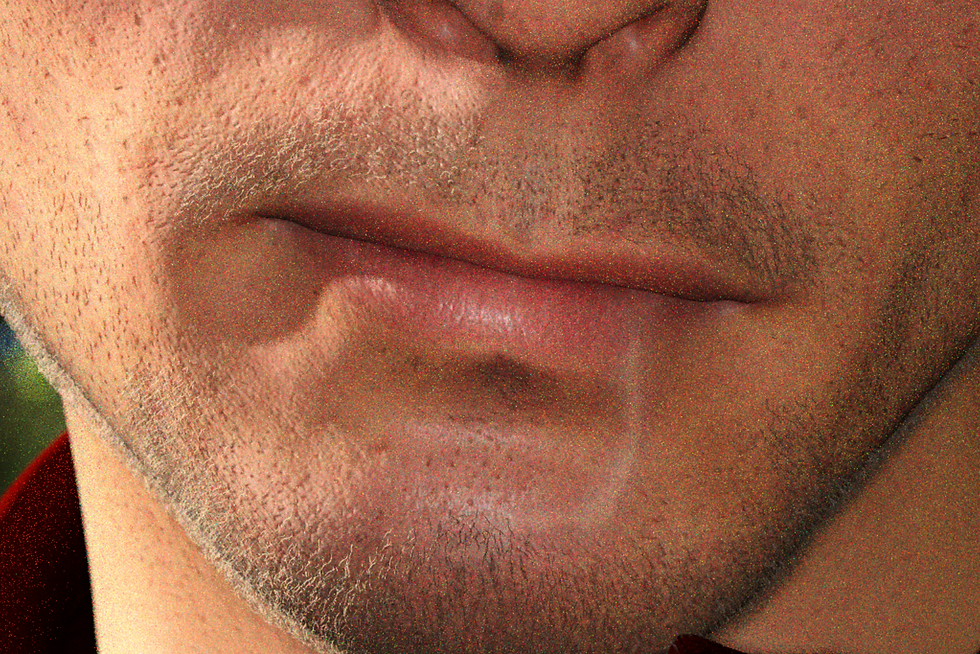
The skin was rebuilt using multiple procedural and hand-painted layers to introduce realistic colour variation, subtle redness, pore detail, weathering and roughness variation as well as recreating Micah's iconic facial scar. Particular attention was paid to avoiding a uniform appearance by varying material response across different areas of the face and hands.
Once the textures were complete, I created a lighting setup designed to complement the material work while producing a cinematic portrait. The final pose and composition were chosen to emphasise facial structure and allow the texture work to remain the focal point of the render.

Challenges
The greatest technical challenge was achieving believable realism without exaggerating surface detail. Human skin contains a significant amount of subtle variation, and balancing colour, roughness and micro-detail required multiple iterations before the material responded convincingly under different lighting conditions.
The artistic challenge was equally rewarding. Because the underlying model remained unchanged, the project became an exercise in understanding how material quality, lighting and presentation influence the audience's emotional response to a character. It reinforced how small artistic decisions can dramatically alter perception without modifying the underlying anatomy.

Outcome
This project significantly improved my understanding of realistic skin creation, physically based material workflows and cinematic character presentation. More importantly, it demonstrated how texturing and lighting contribute not only to realism but also to storytelling and character perception.
It reinforced an area of character art that I find particularly engaging: using materials, lighting and composition to influence how an audience connects with a character, while respecting the original design.


Comments